2024-07-17
We'll be exhibiting All Quiet in the Trenches at this year's Gamescom at the Games Bavaria joint stand in the Indie Arena. Feel free to drop by :)
Our Early Access is finally released! We are looking forward to the feedback. Click here to go directly to Steam!
8. Januar 2024
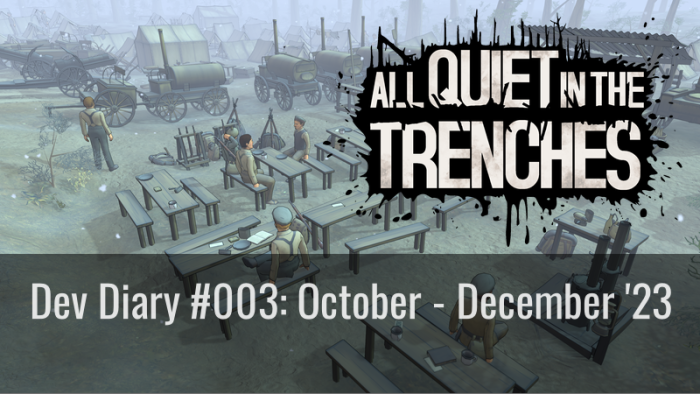
After the demo, we have spent the last few months focussing fully on the Early Access of our game All Quiet in the Trenches. October […]
9. Oktober 2023
As of today, the demo of our game All Quiet in the Trenches is live at Steam Next Fest! Feel free to stop by until […]
7. Oktober 2023
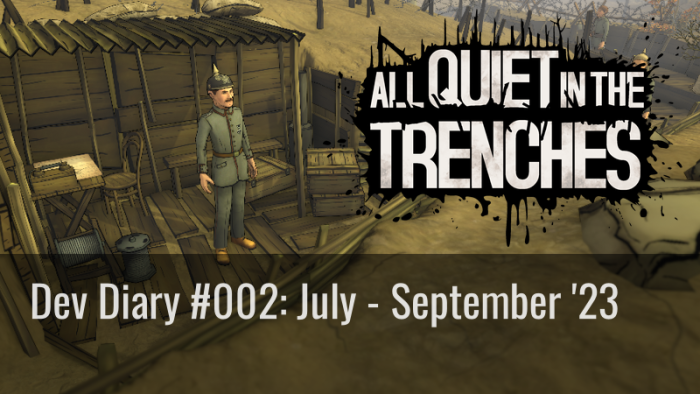
Our last few months have been all about our All Quiet in the Trenches demo for Steam Next Fest, which takes place next week from […]
11. Juli 2023
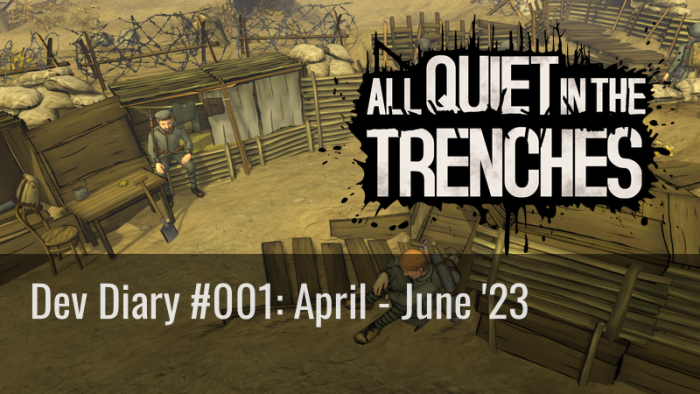
It’s already been a few years since we started developing All Quiet in the Trenches – the first game by our indie studio Totally Not […]
10. Mai 2023
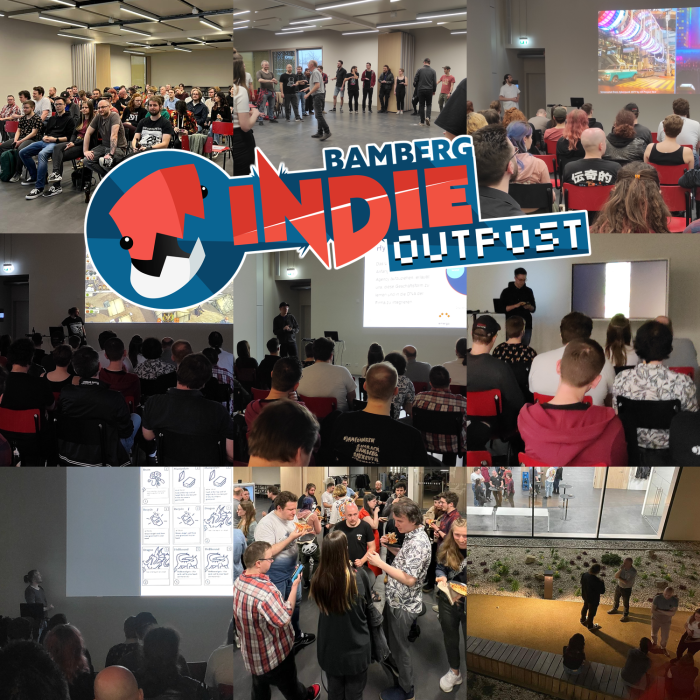
On April 22nd, we organised an Indie Outpost in Bamberg for the first time together with Lagarde1 and Crayon Games. Many thanks again to both […]
15. April 2023
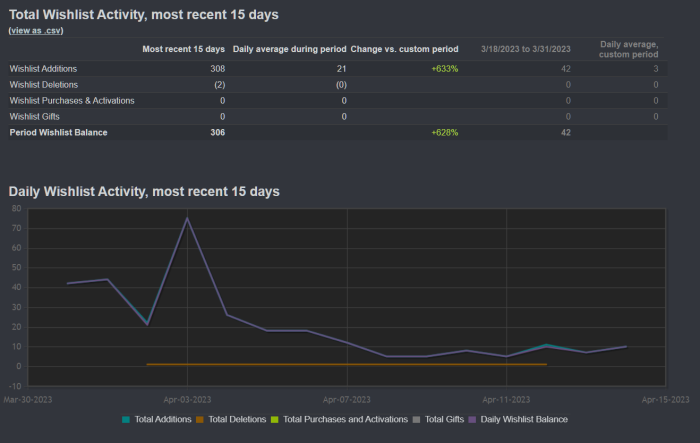
It’s been two weeks since we launched the Steam page for our game All Quiet in the Trenches. We find the insight into the wishlist […]
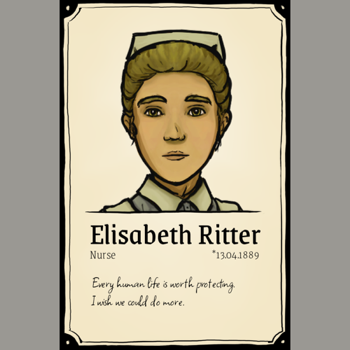
The nurse Elisabeth Ritter takes care of the wounded soldiers together with a team of other nurses. Therefore, she’ll often be part of stories and dialogues centered around injuries and illnesses. She has a good heart and is always concerned about your soldiers but also understands that there’s only so much she can do with the limitations of a field hospital.
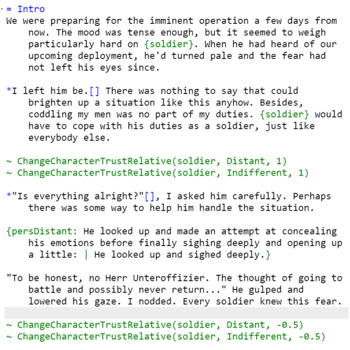
For the creation of our stories we use the opensource narrative scripting language ink by inklestudios. This allows us to easily create very decision-heavy texts including variables and value changes depending on the decisions made.
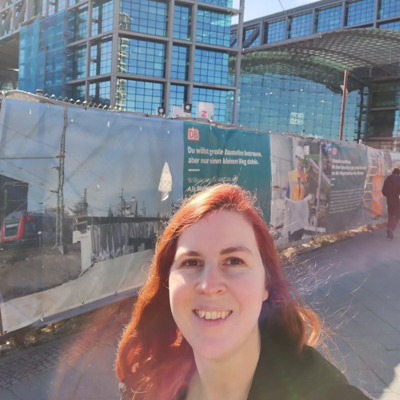
I was asked to be a member of the deutschercomputerspielpreis jury. Tested a lot of cool games in the last weeks, had a very exciting day at the Hauptjurysitzung in Berlin today and met a lot of nice people. :)
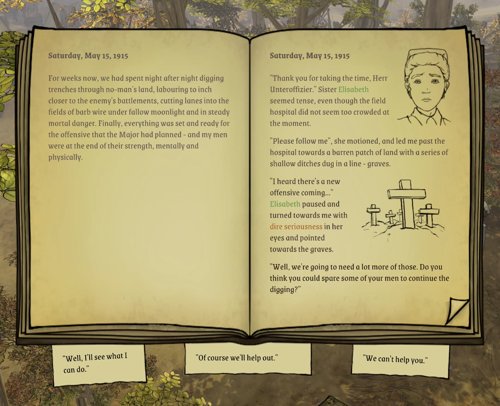

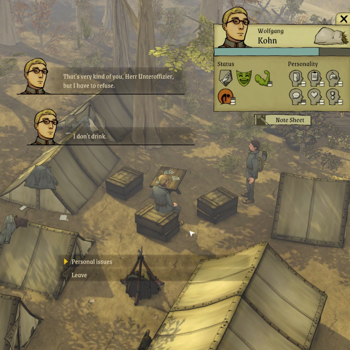
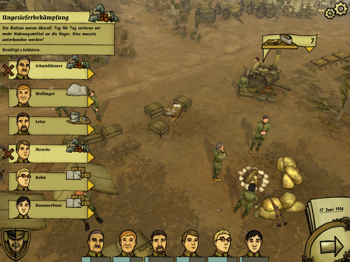
The plot in All Quiet in the Trenches is made up of individual small stories in your diary. These are composed depending on previously made decisions, the current circumstances, the personality of your soldiers, their attitude towards you and each other. Thus, each playthrough is different.
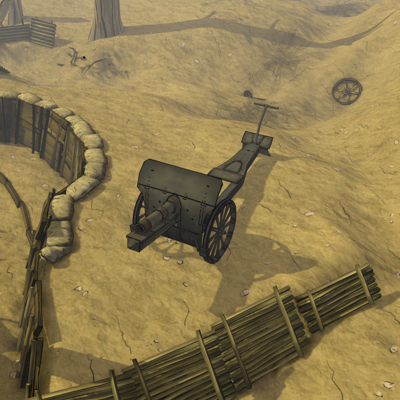
While previous wars had relied on man-to-man combat, artillery became increasingly important in the First World War. The sFH13 heavy field howitzer was put into service in October 1914, weighing just under 3 tonnes with its limber and could therefore be transported by two heavy carthorses.
4. Februar 2023
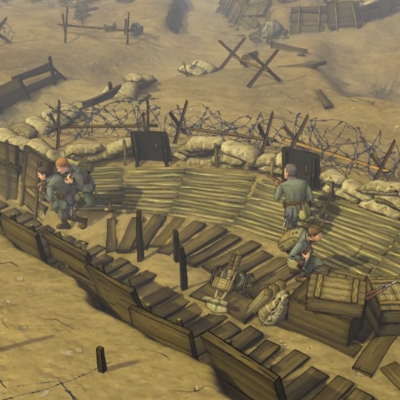
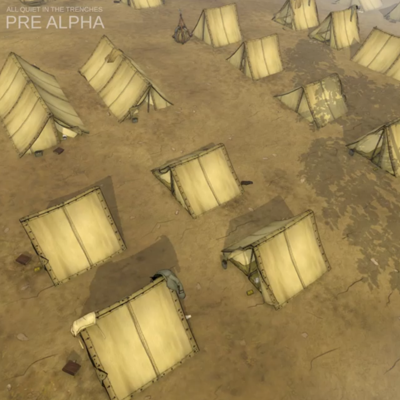
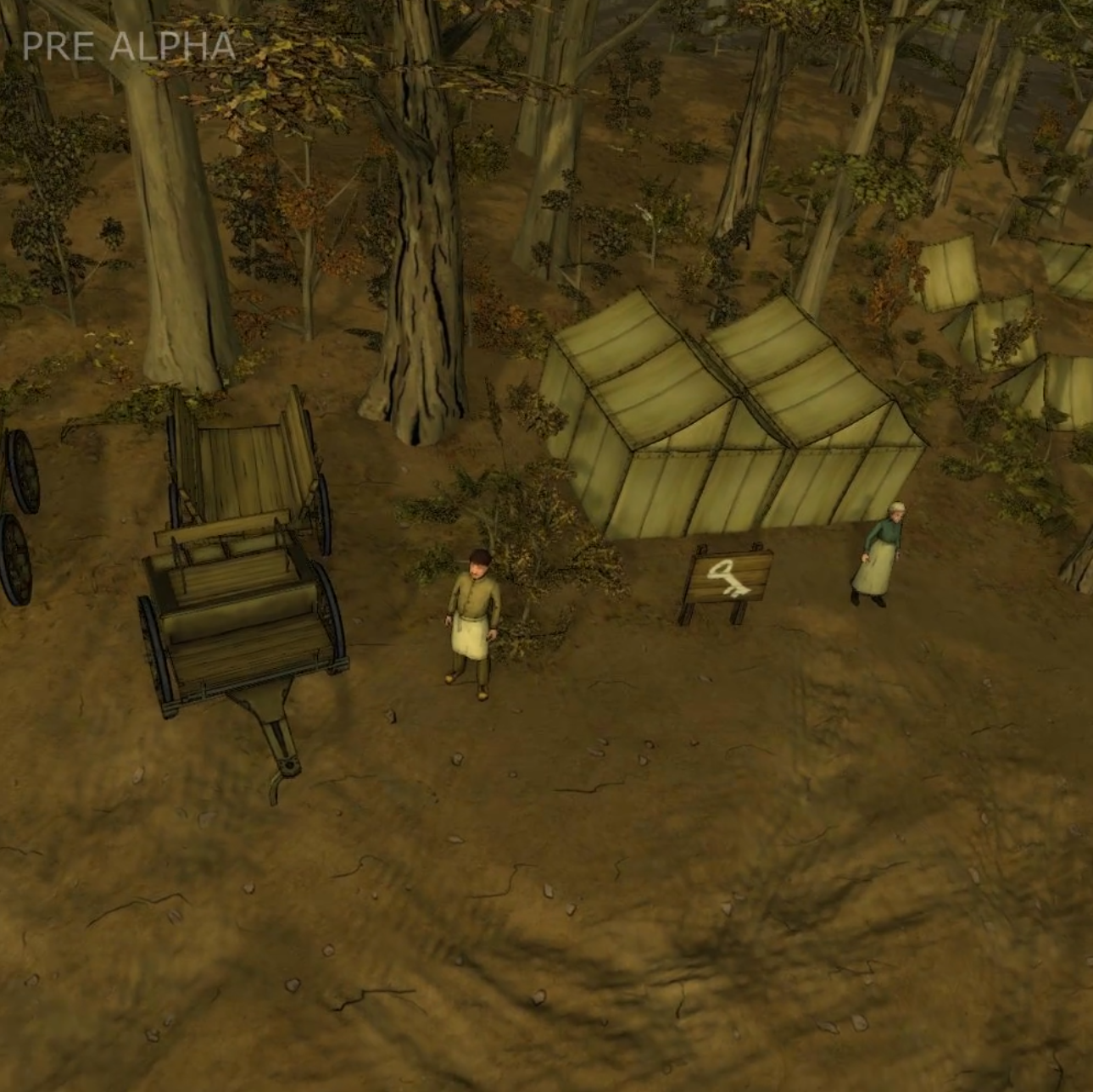
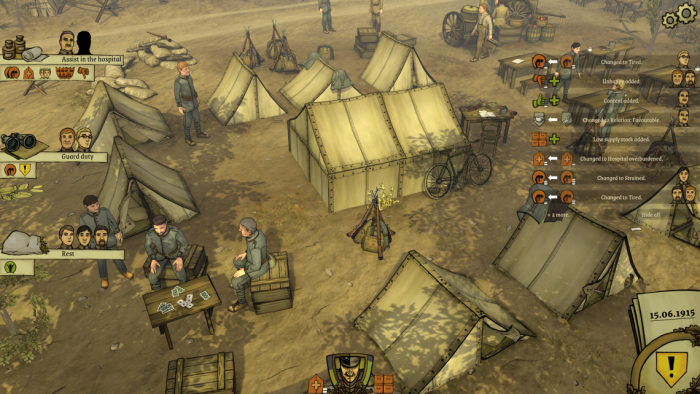
In All Quiet in the Trenches you spend most of your time in the bivouac – a military camp where your soldiers can recover from […]
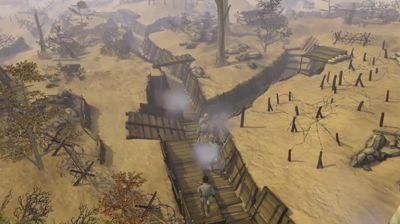
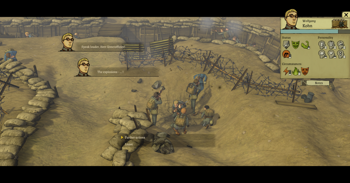
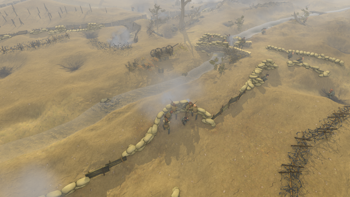
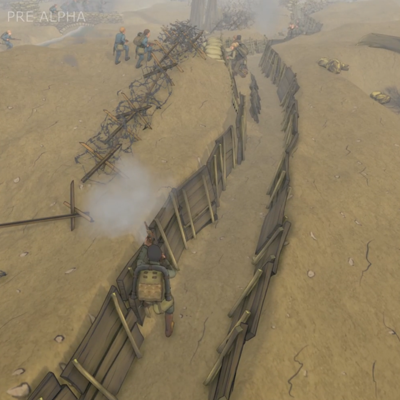
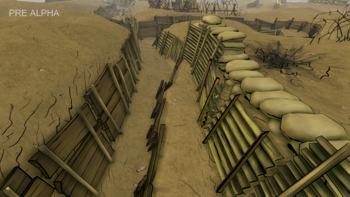
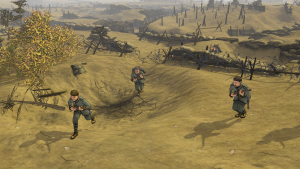
In addition to our blog, we also wanna start showing you our development here again. Most of our work over the last few months has gone into the combat phase. It alternates with the camp phase and serves mainly to illustrate the horror of war and to expose the soldiers to deadly danger. [...]
13. Januar 2023
It’s been a while since we last told you about our development on this site. A lot has happened since then. We made it safely […]
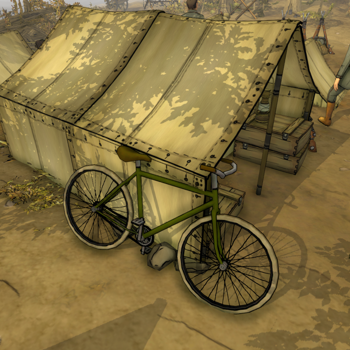
What I like most about my work are the fascinating facts I learn about the past. While doing my research for the modeling of this bike I learned how often they were used in World War I and that most of them were very similar to the so-called fixies that have recently come back into fashion. These are bicycles with a fixed gear that do not have a freewheel mechanism, so that if you no longer pedal, you automatically brake and can also drive backwards with them.
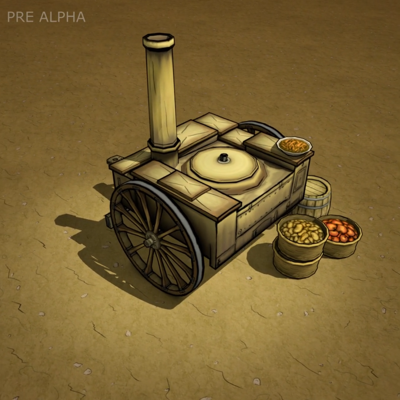
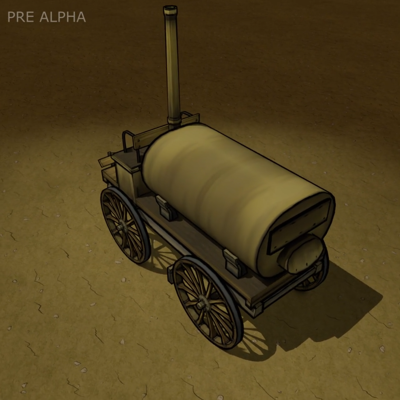
The field kitchen was used throughout the First World War. It got its nickname "Gulaschkanone" (german for "Goulash Cannon") because it was attached to a limber like a cannon and its black smoke vent was folded back when not in use and thus reminded of a cannon. The field kitchen was fired with all kinds of fuel, preferably wood.

12. März 2019
Hey guys, here comes an introduction to a small series: Dirty Unity, in which I will share small, but handy C# code snippets in the […]
3. August 2018
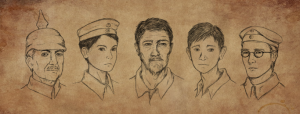
Greetings, fellow humans! In our second blog post I already talked a bit about All Quiet in the Trenches. In this post and the following […]
1. Juli 2018
Fellow humans! There’s news! As if the DevDays hadn’t already been firmly set in our memories as a wonderful experience, they still have more to […]
10. Juni 2018
It’s been two weeks since we attended the GermanDevDays 2018 in Frankfurt, where we publicly presented All Quiet in the Trenches for the first time… […]
11. Mai 2018
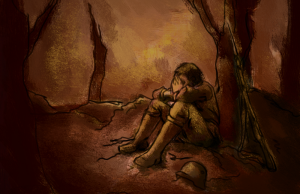
“Welcome to 1914, sir. This is your squad. You should try to get to know them, so you understand how to handle everyone, but… better […]
4. Mai 2018
Greetings, fellow humans! Contrary to some absurd allegations, we’re Totally Not Aliens! After all, who’d give up a perfectly comfortable life on Glarblzork V just […]